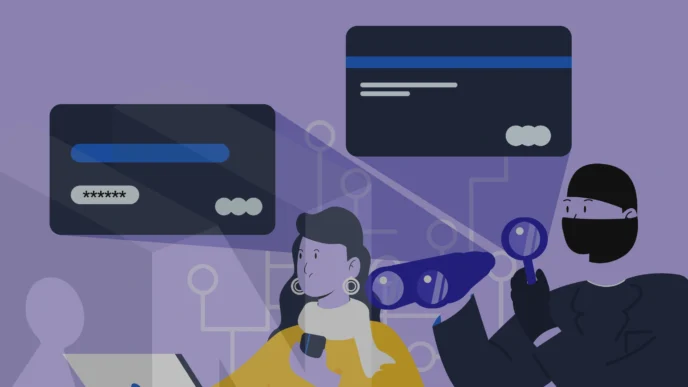

Privacy in 2026 is not a tool. It is a stack — a set of layered defenses matched to a specific adversary, built to survive everyday use, and capable of being turned off for online banking without the whole thing collapsing. The failure mode most people hit is the opposite: they install everything they read about on r/privacy, break half of it within a week, and end up with a setup that is less private than a default iPhone because they gave up halfway. The goal of this guide is a stack that holds.
Two things have shifted the ground in the last year. First, the bar for useful privacy kept rising — AI-enhanced ad targeting, broader ISP traffic analysis, and more aggressive data-broker enrichment mean the “nothing to hide” baseline now leaks more than it used to. Second, the tooling matured. The real questions are simpler: what metadata does each layer leak, and what does the adversary you actually face do with it? When you answer those two questions honestly before touching any tool, most of the popular stack advice turns out to be overkill for you, underkill for someone else, and misaligned for almost everyone in between.
Define Your Threat Model Before Installing Anything
The first mistake is buying tools before defining the threat. Privacy professionals call this a threat model. You can skip the framework jargon and just list three things: the data you actually care about, the adversaries who would want it, and the effort each adversary can bring. A nurse with an abusive ex is not defending against the same party as a climate researcher getting harassed on X, and neither is defending against the NSA.
Most readers sit in one of three bands. The casual-privacy band wants to reduce commercial surveillance, kill ISP tracking, and shrink breach blast radius. The elevated-privacy band — small-business owners, teachers, people with stalkers, journalists without active state adversaries — needs location, identity, and communications hidden from motivated individuals and opportunistic legal discovery. The high-risk band — investigative journalists with sources, activists in hostile jurisdictions, whistleblowers, domestic-violence survivors fleeing partners with technical help — faces adversaries with subpoena power, budget, or both.
Pick the band honestly. Building a high-risk stack when your actual threat is ad targeting means you will fight Cloudflare captchas all day until you uninstall everything. Building a casual stack when your ex has your iCloud password means your stack does not matter.
The Seven Layers That Actually Matter
A working stack closes seven distinct leaks. Each layer protects against a different class of exposure, and the adversary will always work against the weakest one.
Network identity — what your ISP, local network, and destination servers see about where you connect from. Browser identity — cookies, fingerprinting, tracking scripts. Account identity — the emails, phone numbers, and logins that tie activity to you. Communications — content and metadata of your messages. Device and OS — what your phone or laptop itself leaks through telemetry, permissions, and push notifications. Payment — how money ties activity back to a legal name. Behavioral identity — the writing style, topic habits, posting times, and personal disclosures that identify you even when nothing technical does.
Most online advice stops at layers one and four — VPN plus Signal — and declares victory. That is the mistake. Fingerprinting alone can re-identify users across Tor exits. Metadata alone can map an entire social graph. Behavioral identity is what actually deanonymizes people when every other layer holds, because it is the only layer no tool can fix for you.
Network Identity: VPN or Tor, Depending on the Threat
The VPN-vs-Tor debate has a clear answer: they solve different problems, and which you need depends on which one you are defending against. A VPN replaces the trust you place in your ISP with trust in one company. Tor replaces that single trusted party with three volunteer relays, none of which know both who you are and what you are accessing. VPNs are faster, easier, and better for streaming and everyday privacy. Tor offers stronger anonymity but is significantly slower. VPNs require trusting a single provider; Tor distributes trust across multiple nodes.
For Tier 1 and Tier 2 users a reputable no-logs VPN is the right call. The word “reputable” is doing heavy lifting — the VPN industry is full of operators whose logging claims have never survived scrutiny. The providers that consistently pass audits and public tests in 2026 are Mullvad, Proton VPN, and IVPN. Mullvad stays the Privacy Guides favorite for minimal account data (you get a random account number, no email required) and their servers will stop accepting OpenVPN connections by January 15, 2026, signaling a hard commitment to modern protocols. Proton VPN’s Secure Core routes traffic through multiple privacy-friendly jurisdictions before exiting, and the apps are audited annually. Avoid providers that aggressively market “military-grade encryption,” run endless affiliate campaigns, or are owned by an adtech parent — the privacy you are paying for is not a marketing category.
Tor sits a tier above. Use it when you need actual network-level anonymity, when accessing onion services, or when a single VPN operator being compellable would end the game. But do not reach for it casually. While Tor provides anonymity, it routes your traffic through random international nodes. This almost always triggers your bank’s fraud detection systems, locking you out of your account. Compartmentalize — Tor for sensitive sessions, VPN for the rest, no logins crossing between them.
The “VPN-over-Tor” or “Tor-over-VPN” configurations are widely overhyped. For 99% of users, no. While connecting to a VPN before opening Tor does hide your Tor usage from your ISP, it is overkill for the average person. It effectively halves your internet speed and adds unnecessary complexity. You should only use this setup if you have a specific, high-threat model — for example, if your ISP flagging Tor usage itself is a risk. Otherwise, Tor alone is stronger than people assume, and layering VPNs on top usually adds latency and complexity without meaningfully changing your anonymity set.
Browser Identity: Where Most Stacks Break
The browser is where the majority of 2026 tracking actually happens, and it is also where most stacks quietly fail. You can run Mullvad VPN through Tor and still be unique-fingerprinted inside fifteen seconds if your browser leaks canvas rendering, font lists, hardware concurrency, or WebGL output. The tool matters.
The current shortlist from Privacy Guides and the broader community is narrow. If you need to browse the internet anonymously, you should use Tor instead. We make some configuration recommendations on this page, but all browsers other than Tor Browser will be traceable by somebody in some manner or another. For daily use, the choice is between Mullvad Browser, Brave, and hardened Firefox.
Mullvad Browser is the interesting mid-tier option: a version of Tor Browser with Tor network integrations removed, aimed at providing Tor Browser’s anti-fingerprinting browser technologies to VPN users. Built by the Tor Project and distributed by Mullvad, it applies the “hide in the crowd” model — every user ships with the same fingerprint, so sites cannot isolate you. It is not a perfect Tor Browser clone. Mullvad Browser doesn’t provide the same fingerprinting protection as TOR browser — WebRTC and media devices are enabled by default, cross-tab identity leak protection is slightly different, and the fingerprint surface is not identical to Tor’s. But paired with a VPN, it gets you most of Tor’s anti-fingerprinting benefits without the latency.
Brave is the best everyday Chromium-based option. For most people in 2026 who want built‑in anti‑fingerprinting with good usability, Brave is the best single choice, though determined commercial fingerprinting systems can still re-identify sessions using OS timezone and other system signals. Firefox with Arkenfox user.js or LibreWolf is the right call if you want flexibility — per-site exceptions, extension tolerance, and a traditional Firefox UX without telemetry.
Tor Browser remains the only honest answer for anonymity. Everything else is privacy with better usability; only Tor Browser is anonymity. Use it when you need it, know what it costs you, and don’t install extensions, resize the window, or log into anything that identifies you.
Account Identity: Aliases Do More Work Than VPNs
The part of the stack that punches above its weight in 2026 is email aliasing. Most identity correlation happens because one email sits across a thousand services, making cross-site tracking trivial and breach blast radius massive. Break that single point and you break a huge amount of profiling at once.
SimpleLogin (owned by Proton) and addy.io are the two services the privacy community consistently recommends. Each lets you generate a unique alias per service — [email protected], [email protected] — that forwards to your real mailbox. When a broker buys the Amazon list, they get an alias that cannot be cross-referenced. When the service breaches, you disable that alias and move on. It takes an afternoon to set up and it is the single highest-value Tier 2 change you can make.
For the mailbox itself, the 2026 shortlist is Proton Mail, Tuta, and Mailbox.org. Proton has the largest user base, Swiss jurisdiction, and a complete ecosystem — Mail, VPN, Drive, Pass, Calendar. Tuta is the only major provider that encrypts subject lines by default. Their post-quantum cryptography implementation is ahead of competitors, and it is cheaper. Mailbox.org is the German choice for users who want a more traditional IMAP-compatible experience without giving up end-to-end encryption for in-ecosystem mail.
Two warnings. First, none of these services protect metadata from legal orders the way encryption protects content. Because we ultimately must deliver the message to the recipient, we must know who the recipient is — Proton is explicit that metadata encryption remains unsolved. Second, be skeptical of new entrants. Skiff was acquired by Notion in February 2024 and shut down in August 2024. This is exactly why we’re cautious about recommending VC-funded privacy startups. Proton has been operating since 2014. Tuta (formerly Tutanota) since 2011. Track record matters.
Communications: Signal Is Still the Right Default
For messaging, the 2026 picture has not fundamentally changed despite a lot of new entrants. Signal is still the default recommendation for essentially everyone. It uses the Signal Protocol (which WhatsApp, Google Messages, and Facebook Messenger also license), it is run by a nonprofit, its metadata exposure is minimal, and its subpoena responses have been demonstrated in court to contain almost nothing. Signal only keeps “the date and time a user registered with Signal and the last date of a user’s connectivity to the Signal service”. Since 2024 Signal also supports usernames, which lets you hide your phone number from contacts — important, because the phone-number registration requirement has always been Signal’s weak point.
If your threat model puts a phone number itself out of reach, SimpleX Chat is the current best alternative. It has no user IDs at all — it uses temporary anonymous paired message queue identifiers, separately for each of your connections, instead of the user IDs used by all other platforms – there are no long-term identifiers in it. The price is setup friction (you trade QR codes to start conversations) and a smaller user base. Session is a decentralized fork of Signal that routes over an onion-style network with no phone number requirement — usable, less metadata-resistant than SimpleX, but a smoother UX.
What to avoid in 2026: Telegram default chats (not end-to-end encrypted), SMS (readable by carriers and law enforcement), and any app whose E2EE is opt-in rather than default. WhatsApp uses the Signal Protocol for content but Meta is based in the United States and is therefore subject to US law enforcement requests for user data and the metadata picture is concerning given Meta’s ad model.
Device and OS: The Layer That Undoes Everything Else
A perfect network and account stack on a phone that screenshots your notifications to a cloud service is not a privacy stack. The device is where every encrypted message becomes plaintext, every Tor session becomes a browser history, and every alias becomes a push-notification payload.
On mobile, the Tier 3 choice remains GrapheneOS on a Google Pixel. For most privacy-minded buyers in 2026, GrapheneOS on Pixel is the top pick for adversary‑resistant security, supported on Pixel 6 through Pixel 10 families. It offers per-app network and sensor permissions, storage scopes, a sandboxed (non-privileged) Google Play layer for banking apps, and hardware-backed attestation. If you want a less technical path, the Fairphone Gen 6 with /e/OS (Murena) gives you a repairable phone with reasonable privacy defaults and mainstream app compatibility out of the box. On stock iOS, turn on Advanced Data Protection, lock down iCloud, disable personalized ads, and accept that you are still trusting Apple.
On desktop, you do not need Qubes OS to get Tier 1 or Tier 2 results. Fedora or Debian with full-disk encryption and a locked-down browser gets you 90% of the way there. Windows 11 can be workable if you aggressively prune telemetry and use a local account, but it takes ongoing discipline. What matters more than OS choice is behavior — disable cloud sync for sensitive folders, use a password manager with unique passwords everywhere, turn off notification previews on lock screens, and put a webcam cover on something you take to hotels.
Payment and Behavior: The Two Layers No Tool Fixes
Payment is where most serious anonymity stacks die. A perfect Tor Browser session that ends in a credit-card checkout has re-identified you. For Tier 3 users, cash remains the only truly anonymous payment rail. Prepaid cards bought with cash, cash-funded bank cards like Revolut (in some jurisdictions), and privacy-preserving crypto like Monero each have their place, but all have friction and all have operational rules that are easy to break.
Behavioral identity is the last and most misunderstood layer. Writing style, posting cadence, vocabulary, topic obsessions, the exact time of day you are active — these are identifiers that survive every technical defense. Stylometric analysis is now routine in journalism, law enforcement, and harassment campaigns. If your threat model actually requires persistent anonymity, you cannot post on a pseudonym using the same prose style, the same niche opinions, and the same working hours as your real name. That is not a tool problem. That is a discipline problem, and the tools cannot help.
This is why the “privacy without paranoia” framing matters. You cannot sustain behavioral discipline across every account, so pick your battles. Use maximal compartmentalization for the identities that actually need it, and let the others be recognizably you.
Data Broker Removal: Real But Bounded
Data broker removal services are now a legitimate layer rather than a scam category, though the marketing numbers are wildly inflated. In head-to-head tests, Incogni covers roughly 420 brokers with automated, recurring requests verified by a Deloitte Limited Assurance Report; Optery sits at about 390 automated brokers in its top tier; DeleteMe‘s advertised 850 brokers resolves to only 85 brokers are included in automated removals. Over 560 brokers require custom manual removal submissions. If you want set-and-forget, Incogni and Optery are the serious picks. The catch: removal services will never be 100% effective. Some data brokers take weeks to respond to removal requests; others may ignore them entirely. Treat them as ongoing maintenance, not a one-time purge.
Pitfalls That Kill Privacy Stacks
Three failure patterns are worth naming because they affect almost every new privacy stack.
Over-configuration leading to abandonment. People install hardened Firefox with fifteen extensions, break LinkedIn, try to fix it, give up, and end up in Chrome. A working stack with fewer tools beats a broken stack with more.
Inconsistent compartmentalization. Logging into your real Google account inside your Tor Browser, using the same Signal number for anonymous and personal contacts, paying a Mullvad subscription with a credit card in your real name on an account tied to your real email. Any one of these collapses the rest of the stack. Compartmentalization is a rule, not a setting.
Treating “more layers” as inherently better. Stacking a VPN on top of Tor on top of a proxy on top of another VPN rarely adds security; it adds latency and usually makes your traffic more distinctive, not less. The point is not layers; the point is coverage of the seven leaks above.
FAQ
Do I need Tor if I already use a VPN? Only if your adversary can compel your VPN provider or do ISP-level traffic correlation. For Tier 1 and most Tier 2 users, a reputable no-logs VPN is enough. For Tier 3, Tor is not optional.
Is a free VPN ever acceptable? Proton VPN’s free tier is the one mainstream exception — it is audited, no-logs, and the same company as the paid tier. Every other “free” VPN is a data-broker front until proven otherwise.
Does GrapheneOS break banking apps? Most banking apps now work via Sandboxed Google Play on GrapheneOS. A handful still fail attestation. Check the GrapheneOS community app-compatibility threads before committing.
Do I actually need a separate email for every service? No — but you want an alias. One real mailbox, one alias per service via SimpleLogin or addy.io. This is the single highest-value privacy change most people can make.
What about passkeys, YubiKeys, and 2FA? Non-negotiable. A password manager plus phishing-resistant 2FA (hardware key or passkeys) is more valuable than any VPN. Start there if you are starting from scratch.
The Stack That Actually Holds
A useful privacy stack in 2026 is smaller than the internet wants to sell you. For most people: a password manager with hardware-key 2FA, a reputable no-logs VPN, Brave or Mullvad Browser with uBlock Origin, Proton Mail or Tuta with aliases through SimpleLogin, Signal for anything personal, a data-broker removal subscription, and the discipline to keep work and pseudonymous identities on different browser profiles. That is roughly Tier 2 and it will defeat the adversaries most readers of this article will ever face.
If your threat model is higher, add Tor Browser, GrapheneOS, SimpleX, and serious compartmentalization rules — and recognize that the hard part will not be the tools. The hard part will be the behavioral discipline the tools cannot give you. Privacy is layered, imperfect, and sustainable only when you build it for the adversary you actually have. Anyone promising more than that is selling something.