RSA Conference drew nearly 44,000 attendees to Moscone Center in San Francisco last year, and the 2026 edition running March 23–26 is tracking similar numbers. At the same time, SecurityWeek’s free virtual Threat Detection and Incident Response Summit on May 20 will pull thousands of practitioners who never leave their desks. Both formats are growing. Neither is winning. The interesting question in 2026 isn’t “virtual or in-person” — it’s which format earns which use case, and where hybrid events genuinely deliver versus where they just split the difference badly.
This piece breaks down what each format actually delivers for security professionals right now: the real cost picture, what networking looks like at each, how training and certification value compares, and where hybrid formats succeed or quietly fail. It’s aimed at anyone deciding how to spend a 2026 conference budget — whether that’s $500 or $50,000.
The 2026 Conference Landscape Is More Crowded, Not Less
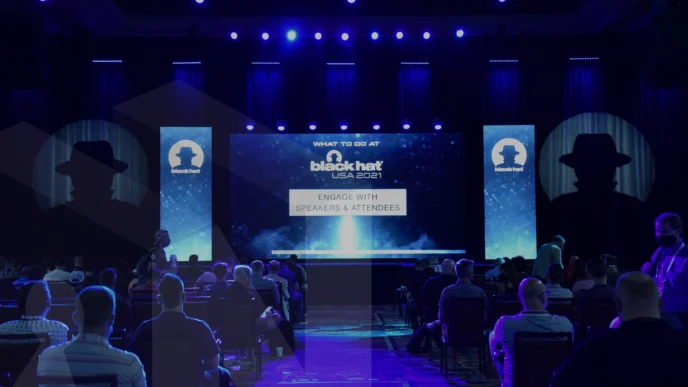
The pandemic was supposed to hollow out in-person events. It didn’t. The largest events came back bigger: RSA Conference hit nearly 44,000 attendees in 2025, Black Hat USA draws more than 20,000, and the August “Hacker Summer Camp” week — Black Hat USA August 1–6, DEF CON August 6–9, and BSides Las Vegas overlapping — remains the single densest concentration of security practitioners on the planet.
What changed is that virtual didn’t go away. SecurityWeek runs a year-round calendar of topic-specific virtual summits — Attack Surface Management on September 16, TDIR on May 20, plus AI-focused and cloud-focused events. FutureCon runs dozens of regional hybrid events a year. Free virtual tracks now sit alongside paid in-person registrations at ISC2 Security Congress, Forrester Security & Risk Summit (November 5–7 in Austin), and Gartner’s events. Most major conferences in 2026 offer some form of remote access, even when the main event is firmly physical.
The practical implication: you are no longer choosing between virtual and in-person as a binary. You are allocating across a portfolio. And the worst allocation is the default one — a couple of big flagship tickets nobody can justify, plus a handful of virtual summits nobody actually attends.
The Real Cost Comparison (Beyond the Ticket Price)
Sticker prices tell a small part of the story. RSA Conference passes range from $149 for expo-only access up to $2,995 for full delegate packages. Black Hat briefings start around $2,500, with trainings adding several thousand more on top. Gartner’s Security & Risk Management Summit runs in the $4,000–$5,000 range before travel. DEF CON stays famously democratic at roughly $440–$500 cash at the door, no advance registration.
Travel, lodging, and lost productive hours often double the total. A week in Las Vegas in early August — peak rates, Mandalay Bay or an adjacent property — can easily push a Black Hat trip past $6,000 all-in per person. Moscone-area hotels during RSAC week run comparably. For a team of five, a single flagship conference becomes a genuinely large line item.
Virtual changes the math entirely. SecurityWeek summits are free. The virtual tiers of major conferences often run $100–$500 or are included free for qualified practitioners. Infosecurity Europe in London and Cyber Security World Asia in Singapore are traditionally free for qualified industry practitioners who register in advance, even in person. No travel, no hotel, no time zones to navigate if you’re local to the stream.
But the hidden cost of virtual is attention. The honest admission most organizations won’t make: a registered virtual attendee with a full Slack queue and a calendar of meetings is not an attendee. They are a registration. The session plays in a browser tab nobody watches. Actual learning happens in replay, if at all — and replay happens at 1.75x with skipping, which is a different experience than being in a room.
Flights: $400–1,200
Hotel (4 nights): $1,600–3,200
Meals / ground: $300–600
Lost work hours: ~32
Flights: —
Hotel: —
Meals / ground: —
Lost work hours: ~4–8
Flights: —
Hotel: $0–300
Meals / ground: $50–100
Lost work hours: ~8–16
Flights: $400–1,000
Hotel: $800–2,000
Meals / ground: Included
Lost work hours: ~20
Networking: The Irreducible In-Person Advantage
Every hybrid platform vendor claims their product replicates networking. None of them do. This is not a technology problem that will be solved in 2026 or 2027 — it’s a structural one. Serendipitous conversation requires co-presence, a shared physical context, and the low social cost of stepping into a circle.
The practitioners most quoted in post-event coverage say the same thing in different words. A Tampa FutureCon attendee wrote that the quality of connections at smaller regional events is “just different” — people stop and talk, nobody is rushing to the next booth. A Chicago attendee credited the in-person setting for enabling “the hard conversations about identity controls, risk quantification, and what’s actually working in the field.” You don’t have those conversations on a Zoom grid.
The networking math breaks down like this:
Flagship events (RSA, Black Hat, DEF CON) give you density — tens of thousands of relevant humans in one building — at the cost of depth. Most interactions are two minutes, a handed-over card, and no follow-up. The value is quantity of weak ties, some of which compound over years.
Executive summits (Gartner Security & Risk, Innovate Cybersecurity Summit, Apres-Cyber Slopes Summit on February 25–27 in Park City) give you depth at the cost of breadth. Invite-only formats with 50–500 attendees, pre-matched 1:1 meetings, and dinners produce real relationships. The cost per relationship is high. The value per relationship is also high.
Regional and community events (BSides, FutureCon, SecureWorld) sit in the sweet spot for many practitioners. Low cost, geographic relevance, and a crowd small enough that you see the same people twice in a day. DEF CON villages work similarly — the Car Hacking Village, the Lockpick Village, the AI Village create sub-communities that persist year over year.
Virtual events are where networking goes to die. Platforms have tried everything: virtual booths, speed-networking rooms, AI-matched introductions, 3D avatars. None have produced anything like the connection rate of a coffee line at Moscone. Use virtual events for content. Don’t expect them to produce relationships.
Content Quality: A Surprising Wash
Here’s the counterintuitive finding: for raw content quality, virtual has largely caught up with in-person. A recorded Black Hat briefing watched later is the same talk as the one delivered live — often better, because you can pause and rewatch. Academic-quality presentations at USENIX Security or IEEE S&P translate cleanly to video. Vendor-neutral technical content from SANS, SecurityWeek, and the various ISAC summits plays fine in a browser.
The exception is anything hands-on. Black Hat’s four-day training blocks, Nullcon Goa’s exploit development labs, DEF CON village hardware hacking, and the Industrial Cybersecurity Launchpad at the ICS Cybersecurity Conference all lose something fundamental in remote form. When the lesson requires poking at a real device, watching your instructor walk over and fix your stuck tooling, or testing an exploit against the lab network, video is a pale substitute. Organizations getting serious value from trainings send people in person.
The other exception is contested or sensitive content. Off-the-record CISO panels, threat intelligence sharing sessions under Traffic Light Protocol (TLP) constraints, incident post-mortems from named companies — these exist because the room is controlled. Recording kills them. At SANS Cyber Threat Intelligence Summit January 26–February 2, at FS-ISAC Summit, at mWise (now folded into Google Cloud Next), the most useful content never streams. If it did, nobody would say anything interesting.
Certifications, CPEs, and the Quiet Case for Virtual
A less glamorous but genuinely significant factor: continuing professional education (CPE) credits. ISC2, ISACA, and CompTIA all require ongoing CPEs to maintain certifications. FutureCon explicitly markets CPE credit as a core benefit; most major conferences now offer 10–20 CPEs for attendance. Virtual events generate CPEs just as effectively as in-person ones, often at a tenth of the cost.
For a practitioner maintaining a CISSP, CISM, and CCSP — roughly 120 CPEs every three years in aggregate when accounting for overlap — the cheapest path to compliance is two or three free virtual summits a year plus one in-person flagship. That’s a legitimate strategy, not a lazy one. The CPE requirement exists because the field changes fast enough that any structured learning helps. Virtual clears the bar.
Where Hybrid Actually Works and Where It Quietly Fails
Hybrid — an event offered both in person and online — is now the default marketing position for most mid-tier conferences. The reality is more uneven.
Hybrid works well when the virtual experience is treated as a distinct product, not a second-class rebroadcast. ISC2 Security Congress (October 22–24, 2026), Forrester Security & Risk Summit, and the America’s Credit Unions Cybersecurity Conference in Austin all run virtual tracks with their own moderators, virtual-only Q&A, and dedicated networking platforms. Remote attendees get something designed for them.
Hybrid fails when the virtual side is a camera pointed at a stage. You see the back of audience members’ heads, the speaker looks tiny, the slide feed is separate from the video, and nobody on site is paying attention to the chat. The virtual attendee is a ghost in the room. Every major conference has done this at least once. Some still do.
The honest middle position in 2026: hybrid is a good hedge for sessions, and a poor substitute for the expo floor, villages, after-parties, and hallway conversations that drive in-person value. If you’re traveling, travel. If you’re not, don’t pretend the remote feed is the same thing.
| Goal | In-Person | Virtual | Hybrid |
|---|---|---|---|
| Deep relationships | Strong | Weak | Mixed |
| Hands-on training | Strong | Weak | Mixed |
| Technical briefings | Strong | Strong | Strong |
| Vendor evaluation | Strong | Mixed | Mixed |
| CPE / credentialing | Strong | Strong | Strong |
| Sensitive threat sharing | Strong | Weak | Weak |
| Recruiting / hiring | Strong | Weak | Mixed |
| Cost efficiency | Weak | Strong | Mixed |
Who Should Prioritize Which Format
Matching role to format avoids the generic “attend the Big Three and hope” approach that wastes most of a team’s budget.
CISOs and senior executives get the most in-person value from small, curated summits. The Gartner Security & Risk Management Summit (June in National Harbor, September in London), Innovate Cybersecurity Summit, Apres-Cyber Slopes Summit, and CISO Forum events deliver peer-to-peer conversation that scales badly virtually. RSAC is worth one appearance per year for profile and vendor coverage.
Practitioners and engineers should prioritize hands-on events. Black Hat trainings, Nullcon, DEF CON villages, and BSides events pay back in raw skill far better than executive-oriented keynote tracks. Virtual fills the CPE and awareness gap between them.
Threat intel analysts should build a calendar around SANS CTI Summit (January 26–February 2 in Alexandria with a free virtual option), FIRST, and sector-specific ISAC events. The material is often TLP-restricted and the networking with peer analysts is hard to replicate elsewhere.
Early-career practitioners should attend everything virtual that’s free and one regional in-person event per quarter. FutureCon, SecureWorld, and local BSides chapters are the most accessible entry points. The ROI on spending the year’s training budget on a single RSA ticket is almost always worse than spreading it across four smaller events.
Red teamers and offensive researchers have a concentrated calendar: Black Hat USA, DEF CON, Nullcon, and Offensive Security’s events. Most of the primary research is disclosed at these, usually in person, and the demo labs rarely translate well to virtual.
GRC, policy, and risk professionals get disproportionate value from sector-specific events — FS-ISAC for financial services, America’s Credit Unions Cybersecurity Conference in Austin (April 28–30 in 2026) for credit unions, ISC West for converged physical-cyber security, and the Cyber Risk Alliance‘s InfoSecWorld (October 12–14 at Gaylord Palms in Orlando). These are often hybrid and the virtual version actually holds up.
Frequently Asked Questions
Are virtual conference CPE credits accepted by ISC2 and ISACA?
Yes. Both treat CPEs earned at virtual or hybrid events identically to in-person ones, as long as the event maintains attendance tracking. Most virtual summits issue downloadable CPE certificates automatically after sessions. Keep the certificates — random audits do happen.
Is it worth paying for a virtual RSA Conference or Black Hat pass if you can’t travel?
Usually not. For $500–1,500, virtual passes to the mega-conferences get you recorded session access that will be on YouTube or the vendor’s own site within a few months anyway. The value of these events is the floor, the hallway, and the after-hours events — none of which the virtual pass includes. Spend that money on a regional event and one or two targeted trainings instead.
What’s the best free virtual cybersecurity conference in 2026?
SecurityWeek runs a strong year-round calendar with no cost — the TDIR Summit on May 20 and the ASM Summit on September 16 are both strong. SANS CTI Summit offers a free virtual tier. Most vendor conferences (Microsoft Secure, Cisco Live’s virtual tracks, Palo Alto Networks’ InterSECt digital access) are free and technically substantive despite the vendor focus.
Do hybrid events actually deliver on their promise?
Sometimes. Events that staff the virtual experience separately — with dedicated moderators, remote Q&A, and a parallel networking platform — deliver real value to remote attendees. Events that just stream the main stage do not. Check whether “hybrid” means a designed product or a camera on a tripod before you register.
The Honest Answer
The format question is the wrong question. The right one is: what am I trying to get out of this, and which event — of any format — delivers that for the cost? Virtual won the content distribution war. In-person won the relationship and hands-on skill war. Hybrid is an uneven compromise that works when organizers commit to it and fails when they don’t.
Allocate your 2026 budget accordingly. One well-chosen flagship, one hands-on training, two or three free virtual summits for CPEs and awareness, and a regional event or two where the conversations are longer than the elevator ride. That portfolio beats a single $5,000 ticket almost every time — and it beats a year of registered-but-never-attended virtual events every time without exception.